
People tend to associate mindfulness with meditation.
But Mindfulness is more than meditation. Meditation is a way to achieve mindfulness. But it isn’t the only way.
Any activity can be mindful if you adopt a mindful mindset.
There are so many benefits to practicing mindfulness, but not everyone finds meditation helpful. This post will walk you through 17 mindfulness practices, that aren’t meditation, that you can use to tap into the benefits of mindfulness.
What Is Mindfulness? And Why Is Mindfulness Important?
Mindfulness is one of those terms that gets thrown around so frequently that we might not realize we don’t actually know what it means. The American Psychological Association defines mindfulness as “awareness of one’s internal states and surroundings.”
Photo by Brett Jordan on Unsplash
Many people (including myself) equate mindfulness with “living in the present moment.” So I was interested to learn that there is actually much more to mindfulness than just being present. Joseph Goldtsein, co-founder of the Insight Meditation Society, breaks down that living in the present (not in the past or future) is just the beginning of mindfulness.
Goldstein defines mindfulness as “experiencing the difference between being lost in a thought and being aware that we are thinking.” In other words, in order to practice mindfulness, we must remain present, while also remaining actively observant of our experiences without judgment.
The nonjudgemental piece is a crucial component of mindfulness.

Featured Image: Photo by Lesly Juarez on Unsplash
Mindfulness Benefits
Mindfulness is a helpful tool that positively supports your wellbeing. Practicing mindfulness can help you…
- Reduce anxiety and stress
- Feel more calm
- Feel increased relaxation
- Slow down your thoughts
- Improve your focus
- Calm your nervous system
- Gain relief from insomnia
Research tells us that people who live in the moment feel happier than people whose minds wander (even if their minds wander with happy thoughts).
I know many of us want to feel happier, so this is a great motivation to incorporate more mindfulness into your life!
Why is Mindfulness Hard?
Do you feel like practicing mindfulness is hard? If so, you are not alone!
Dr Elisha Goldstein, psychologist, author, speaker and founder of the Mindful Living Collective, identifies a few key reasons that explain why mindfulness can feel challenging.
- In our society and culture, people tend to be busy and stressed.
- Learning how to calm your nervous system helps you settle into mindfulness, but many of us find it difficult to soothe our nervous systems.
- Constant notifications from our devices trains us to have “fractured attention” (think about how many notifications you get on any given day).
- When you say/think “I’m not good at mindfulness” or “mindfulness is too hard,” you subconsciously strengthen that belief and are more likely to give up.
- Many people lack positive social cues and mentorship. An example of a positive social cue is when thinking of a certain person inspires you to do an action, such as meditating.
- Culturally, we are much more independent from one another than we were in the past. Dr. Goldstein states that lacking a peer group to connect with or a mentor to ask questions to can make it hard to continue a mindfulness practice.
If you do find mindfulness challenging, please know that that is very common. Finding ways to add more environmental and social cues that motivate us to practice mindfulness helps make mindfulness easier. Those cues guide your brain to wanting to adopt mindfulness habits.
I hope this helps you feel validated and encourages you to implement a mindfulness practice (even if you feel like you have already tried and “failed”).

Photo by Brett Jordan on Unsplash
Something that really helps motivate me to cultivate healthy habits is this online community. Because of the people I connect with through social media, I get to see people practicing healthy habits, which then motivates me to practice healthy habits. I also have a few close friends who are very goal-oriented.
Having this community is immensely beneficial for moving you forward on your personal development journey. Even if you don’t have similar-minded people in your immediate circle, try using social media to find an online community.
If you are reading this post (and hopefully following me on social media as well – links below) you are already headed in the right direction. My goal is to provide content that allows you to learn realistic tools to better yourself and create your dream lifestyle.
That said, how can we learn to spend more time in the present moment?
I decided to write this post to offer some simple mindfulness practices that aren’t meditation. You can implement these practices into your daily routine alongside meditation. Or you can use these mindfulness practices as substitutes to get the mindfulness benefits, if meditation isn’t your thing!

Photo by Castorly Stock : https://www.pexels.com/photo/iphone-6-on-gray-textile-4114790/
Mindfulness Practices
Go Slow
My first mindfulness tool is to go slow. I am putting this tip first, because it is important to keep in mind for the other activities on this list. Make it a habit to act slowly and intentionally. I spend more time than I would like to admit rushing. But rushing around is not enjoyable and most of the time, isn’t very mindful. If this sounds like you as well, don’t beat yourself up! I am compassionately inviting you to pause, take a deep breath, and slow down. This will make a huge difference in your experience with any activity. Slowing down will hopefully relieve you from feeling overwhelmed and like you are being pulled in too many directions at once.
Adopt a Playful Attitude
Dr. Elisha Goldstein advises that taking on a “playful attitude” helps prevent us from getting too caught up in focusing on mindfulness’ challenges and our brains’ negativity biases (tendency to focus on the negative). This can also help you maintain self-compassion during your mindfulness journey. One way you can learn and practice this “playful” mindset is to treat mindfulness as an experiment. For example, tell yourself that you just want to try and see what happens if you remain present during an activity you usually do on auto-pilot, like driving to work or school. Treating mindfulness like an experiment takes away the pressure to achieve a certain outcome.

Photo by Thought Catalog on Unsplash
Learn to Detach from Your Thoughts
Have you ever stopped to ask yourself, “What is a thought?” Joseph Goldstein gives us an important lesson about our thoughts. When we are not aware of our thoughts, they get to act like “little dictators” that run our lives. But when we are aware of our thoughts, we give ourselves the space and freedom to make intentional choices. You get to choose whether or not you want to act on your thoughts.
Notice Your Surroundings
Paying attention to your surroundings is a simple way to ground yourself in the present moment. Intentionally take time throughout the day to (non-judgmentally) notice what is going on around you.
Lexie Lombard, host of the @Lexie Podcast shares that she grounds herself by asking “Where are my feet?”
Similarly, I like to mentally note where I am and what I am doing to feel more present.
Practice asking yourself “Where am I?” to draw yourself out of your head and into the present moment.
Additional Mindfulness Questions to Ask Yourself:
What am I doing?
Who am I with?
How am I feeling (physically and emotionally)?
Really take time to reflect and answer these questions. Use this as an opportunity to get in touch with yourself and notice your experience.
Focus on One Thing at a Time
As much as we love to try to convince ourselves that multitasking is efficient and productive, the reality is that it is hard to focus on multiple tasks and do them all well. I know this is something I struggle with, so this reminder is for me as much as it is for you.
Focusing on one task at a time allows you to give that task your full and undivided attention.
Photo by Georgia de Lotz on Unsplash
Take Deep Breaths
I’ve spent a lot of my life breathing improperly. And you probably have as well.
You probably have heard this at some point, but we need to practice belly breathing. You want your stomach to rise and fall when you take a breath, not your chest or your shoulders.
Once you learn proper breathing techniques, train yourself to take deep breaths throughout the day. This is a small habit I started that helps me a lot with mindfulness. I set my Apple Watch to give me Mindfulness reminders throughout the day. That notification is my cue to take some deep breaths.
Photo by Chandler Cruttenden on Unsplash
Take a Mindful Shower
Turn showering into a mindful experience. This was something I already kind of practiced, but started paying more attention to once I heard Rachel, host of the Rachandlife podcast mention it in a podcast episode.
Next time you shower, stay present with the act of showering. Notice every detail, from the way the water feels when it hits your skin to the smell of all your bath products.
Now that someone put a name to it, I am even more intentional with incorporating this practice into my evening routine. I started telling myself that while I am in the shower, I don’t need to think about anything that exists outside the shower. Remind yourself of this anytime your mind starts wandering.
Another mindful shower tip is to add a few drops of essential oil to your shower. Ideally, a relaxing scent, such as lavender. This leads into the next tip, which is
Use Your Five Senses
Tuning into your five senses is a simple mindfulness activity. Noticing what you can see, hear, smell, touch, and/or taste is a simple and tangible way to train your brain to focus on the present moment.
Do Mindful Body Scans
A mindful body scan involves mentally scanning each body part for a few seconds and noticing what you feel. Mindful body scans can help you gain awareness of any tension or pain and can also give you skills for managing that.
When I was in college, I used Progressive Muscle Relaxation, a type of body scan, to help me fall asleep faster. If you want to try this relaxation technique, before falling asleep, tense each one of your muscles for a few seconds, then release. Do this throughout your whole body. Progressive muscle relaxation works to ease physical tension, which also helps with mental relaxation.

Photo by Irina Iriser: https://www.pexels.com/photo/white-petaled-flowers-1122626/
Spend Time in Nature
Spending time in nature can help us reconnect with ourselves and with the Earth. Many people find spending time in nature very relaxing. I know I feel calm and peaceful when I spend time outdoors on a nice day. Looking at the sky or at a beautiful flower while on my daily walk reminds me to be present and express gratitude for my current experience.
Practice Awe
According to Greater Good Magazine, “Awe is the feeling we get in the presence of something vast that challenges our understanding of the world, like looking up at millions of stars in the night sky or marveling at the birth of a child.”
Awe can go hand-in-hand with mindfulness because experiencing awe requires you to be present. So, if you want to experience more mindfulness, seek out awe-inspiring experiences, such as taking a beautiful nature walk or observing art.
Take a Mindful Walk
I typically let my mind wander while I’m walking. But I know taking a mindful walk is a popular and powerful practice, so I wanted to include it on this list. A mindful walk just means taking a walk while remaining focused on the experience of walking.
Practice Yoga
Yoga is one of my favorite forms of movement. And practicing yoga can help you sharpen your mindfulness skills. Yoga is a form of moving meditation, which can work well for anyone who finds it uncomfortable to sit still for extended periods.
Get Into a Flow State
Flow is when you are so focused on a task or experience that you don’t notice time passing. If you have ever been so engrossed in an activity that you lost track of what was happening around you, then you have experienced flow.
“How to enter a flow state” is a very popular question. While flow might feel elusive at times, there are techniques that can help you achieve flow, such as reducing distractions and starting your schedule with an activity you enjoy.
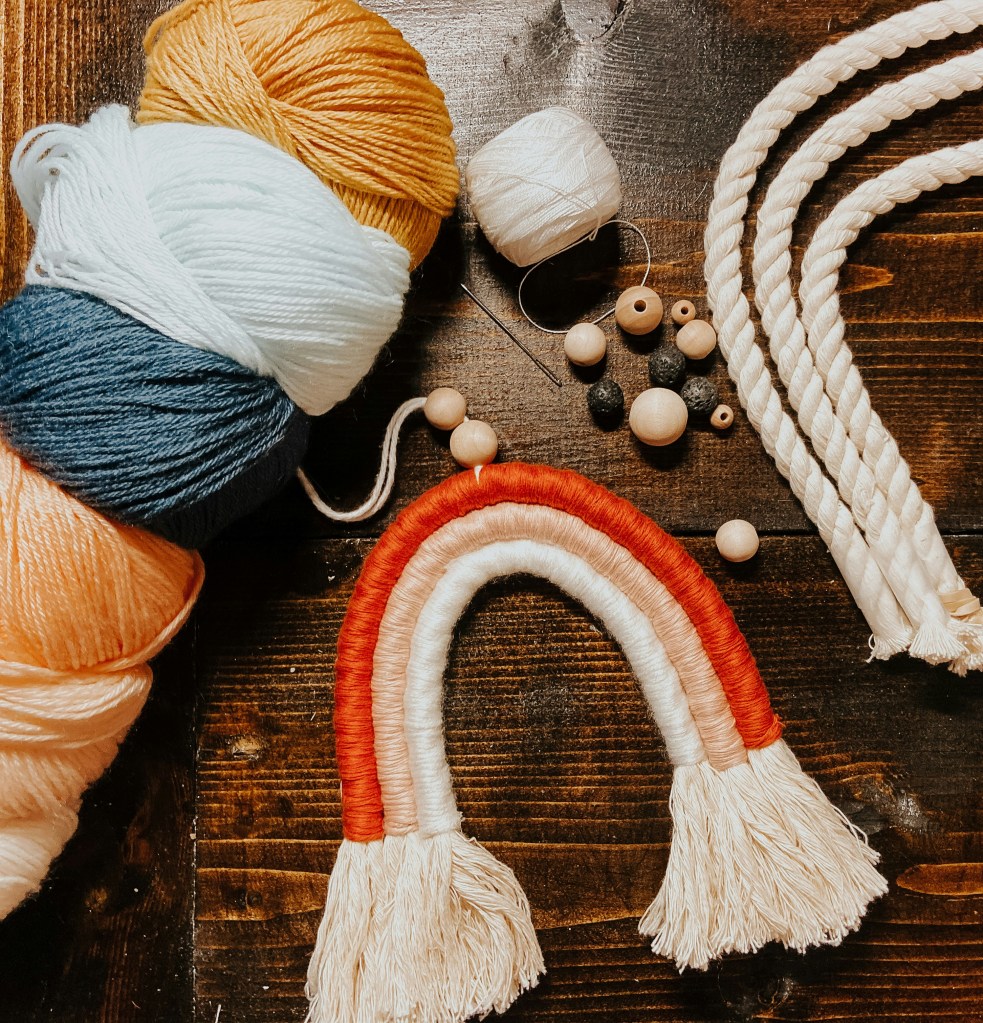
Photo by Meg Wagener on Unsplash
Do Meditative Crafts
Crafting is another great way to practice mindfulness. How fun! Crafts like mandala coloring books and diamond art give you something soothing to focus on, which can help you calm your mind. Additionally, many crafts, like knitting, crocheting, and painting involve repetitive motions, which reduce cortisol levels.
Read this post to learn about the different ways crafting can improve your mental health.
Journal
We all know that journaling is a tried and tested mental health tool. But how can we use journaling to support our mindfulness practice?
Journaling allows you to gain awareness of your thought patterns and helps you process any uncomfortable thoughts. If you find that your thoughts prevent you from experiencing mindfulness, journaling can help you get some space.
Mindful Journal Prompts
- How am I feeling physically and mentally?
- Do I have any opinions or judgments about how I am feeling?
- What is my intention for the day?

Photo by Brooke Lark on Unsplash
Eat and drink mindfully
Be present with what you are eating or drinking. Pay attention to how your food tastes and smells, as well as how you feel while eating.
Preparing your food is also a great opportunity to practice mindfulness.
I do want to give an opinion on what “counts” as mindful eating (but no one is keeping score here). I have heard many people who are against watching tv or doing any other activity at all while eating. Personally, I enjoy watching tv while eating, as well as reading a book while eating. I want to make the argument that you can mindfully choose to pair a joyful activity with a meal. That is a beautiful way to relax and you can still pay attention to the food you are eating and how you feel.
I hope these tips help you and inspire you to incorporate them into your mindfulness practice. If you don’t feel comfortable sitting for long periods of time to meditate, these activities can help you practice mindfulness and gain the same benefits. And if you do practice meditation, these activities can add more mindful moments to your life.
Do you currently have a mindfulness practice? Or are you interested in starting a mindfulness practice? Let me know in the comments!
Make sure to sign up for my email list to get notified of future blog posts with positive and realistic self-improvement tips. And make sure to follow me on social media (links below) to stay connected and receive more content to help you live your best life!
 Life by Julia
2 thoughts on “Improve Your Life With Mindfulness: 17 Mindfulness Practices That Aren’t Meditation”