
Do you feel too exhausted to engage in meaningful activities, like spending time with your friends, practicing your hobbies, or growing your business?
Do you wonder why you still feel tired, even after getting a full night’s sleep or after a relaxing day doing nothing?
If you answered yes to either of those questions, I completely understand how frustrating that can feel. Recently, I’ve been feeling drained for seemingly no reason and realizing that more sleep isn’t helping.
But, luckily, I think I found the solution to feeling more rested and energized!
If you feel chronically exhausted, it might be because you aren’t resting properly! So I wanted to create this post to explain how you can make sure you get the type of rest that will actually recharge you!
What do you think of when you think of rest?
◇ Sleep?
◇ Watching your favorite comfort show?
◇ Spending time with loved ones?
Did you know that there are actually 7 different types of rest?
This is so important to understand because you might think you are resting, but not getting the type of rest you need. And if you aren’t getting the right type of rest, based on where you expend the most energy, you won’t feel more rested.
I first learned about this concept after listening to this episode of the Just Glow With It Podcast.
Podcast host, Jasmin Shah, breaks down Dr. Saundra Dalton-Smith’s findings about the 7 different types of rest and how they impact our well-being.
Dr. Dalton-Smith, internal medicine physician and author of Sacred Rest Recover Your Life, Renew Your Energy, Restore Your Sanity, teaches us about 7 different types of rest we need to incorporate into our lives for optimal wellness.
Read on to unlock the key to feeling fully rested and energized (instead of exhausted and burnt out)!

Photo by Unseen Studio on Unsplash
How Do You Manage Stress?
Many of us relate to feeling stress, whether that stress comes from school, work, family life, or other triggers. And most of us are also familiar with the concept of “stress management.”
But we can actually benefit from shifting the way we think about stress.
Dr. Dalton-Smith defines stress as the changes and challenges we face in our lives. She believes we cannot actually “manage” stress because we cannot manage these changes and challenges.
However, when we experience changes and challenges, we can control how we respond to them and recover from them.
What is Rest?
Dr. Dalton-Smith defines rest as “those restorative activities…that recovery period that comes that helps you be able to build inner strength to grow and to build the resilience that you desire.”
“Rest is about restoration, so it is not simply about cessation… It’s about pouring back into the places that have been depleted.”
Rest is more than just taking a break from activities. Doing more of certain activities can actually make you feel more rested!
Rest can be an active process, which I recognize pushes against what I typically associate with rest.
Rest Benefits
Rest is important for our physical and mental well-being.
Some of the Key Benefits of Rest:
◇ Optimal health
◇ Clear thinking
◇ Reduced stress and anxiety
◇ Increased energy
Resting is Productive
Does resting make you feel lazy and unproductive?
If so, you are not alone! Many of us (myself included) feel guilty about resting, because we feel like we should be doing something more “productive.”
Howver, adequate rest is essential for long-term productivity. Allowing your body and mind to get enough rest enables you to work more efficiently.
Working long hours with no breaks is not productive. Overworking yourself actually makes you more likely to make mistakes (i.e., making your work less effective). Plus overworking puts you on a fast track toward the burnout we want to avoid.
7 Different Types of Rest
So the million-dollar question is:
How do we replenish the areas where we are drained?
Dr. Dalton-Smith says that we need to start by understanding the different types of rest. We need to understand the different areas of life where we expend energy to understand how we can adequately re-energize ourselves.
If getting more sleep isn’t making you feel better, you might need to focus on one of the other areas of rest.
Understanding the different types of rest allows you to give yourself the appropriate type of rest, based on your needs. Once you start doing this, you will likely feel more rested and energized overall.
What are the Different Types of Rest?
The 7 different types of rest you need to know about are physical rest, mental rest, creative rest, emotional rest, sensory rest, social rest, and spiritual rest.

Physical Rest
Sleep is often the first thing we think of when we think about rest. But Dr. Dalton-Smith says we need to expand this understanding.
Active vs Passive Physical Rest
Sleep is a passive form of physical rest, but there are also active forms of physical rest that you can use to help your body unwind and feel more relaxed.
You also need to think about ergonomics. If your work set-up causes your body to use energy unnecessarily, that is something you can address.
Physical Rest Examples
◇ Sleep
◇ Meditation
◇ Restorative yoga
◇ Stretching
◇ Walking
◇ Progressive Muscle Relaxation
◇ An ergonomic work setup
These are just a few examples, but your physical rest might look different.

Photo by Annie Spratt on Unsplash
While you can engage in active rest, such as yoga, stretching, or a leisurely walk, please don’t discount the importance of passive rest days. As someone who used to believe you had to exercise every single day without resting, please don’t fall into the same mental trap that I did.
It was only in the last couple of years that I started allowing myself rest days where I take a break from my typical active habits. I wanted to share from my personal experience how that practice makes my life feel so much more balanced.
Additionally, If you only engage in physical rest, you might miss one of the other areas of rest. Read on to learn about the other types of rest you can incorporate!

Photo by Sixteen Miles Out on Unsplash
Mental Rest
Unfortunately, mental rest deficits are very common.
If you find that you are forgetful or have difficulty concentrating, and don’t have any underlying medical conditions causing those symptoms, you might actually have a mental rest deficit.
Think about how much we engage our brains daily. Especially for anxious girlies, like myself, sometimes it might feel like your mind is on a hamster wheel.
Have you ever found yourself lying in bed feeling physically exhausted, but unable to actually fall asleep because your mind was racing?
Mental rest allows you to step back and quiet some of that noise.
You need to give yourself a chance to switch your brain off for a little while and get a break from the planning, thinking, analyzing, decision-making, problem-solving, and everything else our amazing brains do for us every day!
In one of her webinars, Dr. Dalton-Smith asked a question that pierced straight through to my soul.
“How many [windows or tabs] are open for you on a typical day?”
As I write this post, I have 10 tabs open, split up among 3 windows! This is a pretty typical scenario for me.
Multi-tasking teaches our brains to go through large amounts of information without concentrating on and processing that information. I have multiple tabs open with information that I haven’t yet looked through, but I know I can pull up as needed.
Have you ever walked into a room and found you couldn’t remember what you needed to do in there? Dr. Dalton-Smith says our brains are now used to not needing to concentrate on or retain information. This makes it much harder to call on information at will.
Photo by Jessica Mangano on Unsplash
On the other side of this, when you ruminate about your worries and responsibilities, that rumination tells your brain that you want to remember that information.
This is similar to how you would study and memorize information in school. So now, your brain will respond and hold onto that information, even if it keeps you up at night.
A simple way to quiet your mind, so rumination doesn’t keep you awake is to keep a notepad next to your bed and do a “brain dump” before bed. A brain dump is a journal exercise where you write down anything and everything running through your mind.
Externalizing those thoughts by getting them onto paper can help you release them and stop the mental chatter.
Read this post to learn other useful journal practices that can help you quiet your mind.
Multi-tasking will quickly drain your mental energy. So, focusing on one task at a time is also a good way to practice mental rest.
Mental Rest Examples:
◇ Take a break
◇ Crafts
◇ Mindfulness
◇ Limit distractions
◇ Time block your schedule (to cut down on multitasking)
◇ Daydream

Photo by Spring Fed Images on Unsplash
Creative Rest
Creative rest involves seeking experiences that inspire you and boost your creativity. Even if you feel like you are not a creative person, you can still tap into creative energy.
At first, I thought that creative rest would involve engaging in hobbies and crafts. Interestingly, Dr. Dalton-Smith says that creating something yourself, such as painting, is not creative rest. Creating something new is actually work. Creative rest involves enjoying something that has already been created.
When we experience the awe that comes with admiring different forms of beauty, we engage in creative rest. This can be natural beauty, like mountains or the ocean, or creative beauty, like art and music.
Creative Rest Examples
◇ Connect with people who inspire you
◇ Seek awe-inspiring experiences (like spending time in nature or visiting a beautiful art museum)
◇ Learn something new
◇ Surround yourself with inspiring images
Photo by Sixteen Miles Out on Unsplash
Emotional Rest
Emotional Rest involves experiencing and expressing your emotions. Emotional rest allows you to process and work through any emotions that might weigh you down.
Have you ever suppressed your emotions about a difficult situation, so that others around you don’t worry? This is what Dr. Dalton-Smith calls “emotional labor.”
But, stuffing down our emotions without working through them leads to emotional rest deficits. Everyone needs a safe space to release their emotions.
We have to allow ourselves emotional rest to express those emotions in a healthy way, so they don’t fester and cause other negative consequences.
Even though making art is not considered creative rest, making art is a form of emotional rest.
Emotional Rest Examples:
◇ Therapy
◇ Arts and crafts
◇ Making music
◇ Journaling
◇ Calling a loved one
Emotional Rest is NOT Trauma Dumping!
After a hard day, many of us, myself included, want to call a loved one and vent about how horrible our day was. We want to give a play-by-play of every terrible thing that happened that day. But this is NOT emotional rest. When you vent, you narrate a story. But venting doesn’t require you to tap into your actual emotions.
To practice emotional rest, describe how an experience made you feel, instead of describing every detail of what happened.
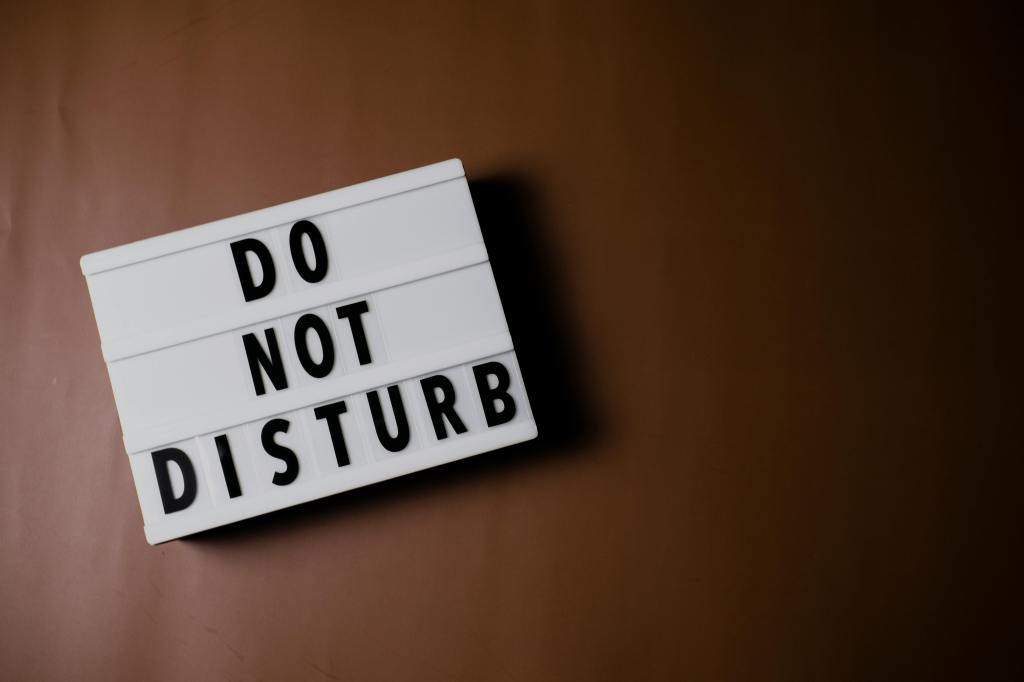
Photo by Nothing Ahead: https://www.pexels.com/photo/do-not-disturb-text-on-brown-surface-8296033/
Sensory Rest
Too much sensory input (lights, noises, visuals, etc.) is draining and can also make you irritated, agitated, rageful, or angry.
Sensory overload can impact your energy levels and mood after some time.
As much as I love technology, social media, and entertainment, I acknowledge that our world can feel very overstimulating at times. Sometimes we need to give ourselves time to take a break from the noise. This can help you feel more calm, present, clear-headed, and focused.
We can’t necessarily get rid of the sensory input around us, but we can find ways to make our environments less stimulating. For example, I prefer to turn on a small lamp to light my living room in the evening, instead of a bright overhead light. I also like to put my phone and computer on Do Not Disturb to minimize notifications while I’m working.
Sensory Rest Examples:
◇ Put your devices on Do Not Disturb
◇ Focus on one activity at a time (don’t multitask)
◇ Turn off any unnecessary notifications (only enable notifications for apps that really need them)
◇ Leave your phone in another room
◇ Spend time in nature
◇ Use dim lights
◇ Use noise-cancellation headphones
◇ Find quiet spaces to work or hang out

Photo by Ashford Marx: https://www.pexels.com/photo/laughing-friends-having-fun-on-picnic-7150075/
Social Rest
As an introvert, I sometimes find socializing tiring. After a lot of social events, I need time alone to recharge.
But I also know I need balance. Spending time with the right people can actually energize me (if any of my friends are reading this, I love you so much!).
Spending too much time alone can leave us feeling isolated.
Emotional and social rest deficits often go together. This can happen when we don’t differentiate between the relationships that energize us and those that drain us. Start paying close attention to how the people in your life make you feel.
Focus on creating a balanced social calendar, as well as on cultivating fulfilling relationships with people who fill your cup.
Social Rest Examples
◇ Call a loved one to catch up
◇ Text someone to let them know you’re thinking about them
◇ Make fun plans with a friend or group of friends
◇ Join a local club or organization
◇ Surround yourself with positive, uplifting people.

Photo by Omkar Jadhav on Unsplash
Spiritual Rest
Spiritual rest can vary based on different beliefs.
Many people associate spirituality with organized religion. But spirituality is more than organized religion.
The main focuses of spiritual rest are feeling accepted, feeling like you belong, feeling like your life has a purpose, giving back to your community, and feeling a sense of connection.
If you don’t feel connected to your spiritual side, but want to feel a greater sense of purpose, take this opportunity to learn more about different spiritual practices. There are so many amazing online resources for you to do this. Try searching for spiritual practice inspiration using your chosen search engine and social media platform(s)!
Spiritual Rest Examples
◇ Learn about different spiritual practices
◇ Meditation
◇ Prayer
◇ Attend a religious service
◇ Write a letter to the Universe
◇ Give back to your community

Photo by Olha Tatdot on Unsplash
How to Rest: How to Incorporate Different Types of Rest Into Your Lifestyle
How can we rest properly and remain rested? Incorporating rest into your lifestyle will help keep you energized. Making rest part of your self-care routine is a preventative action that will keep your energy levels up.
The goal is to avoid getting so exhausted you end up crashing and needing more extreme solutions.
Unfortunately, many of us aren’t able to take extended time away from our responsibilities to recover from exhaustion.
Luckily, adding small moments of rest throughout your day and week makes it less likely that you will get to that exhausted, burnt-out state.
Dr. Dalton-Smith says we can layer rest in with our other habits to create a “work-rest rhythm.” She says we need ebbs and flows between when we use energy and when we restore energy.
This next section will give you some actionable steps for creating your custom work-rest rhythm.
What to do Next
This information is only useful if we do something with it.
◇ First, figure out which form of rest you need most. In other words, where do you use the most energy in your life?
Take this free assessment to determine where you need more rest.
◇ Then, focus on getting the types of rest that restore those areas.
If your only idea of rest is sleeping and watching your favorite show, that might be the reason you feel chronically exhausted.
◇ Once you identify that you are not adequately rested, Dalton-Smith says you need to learn about the 7 different types of rest and start getting more of them.
◇ Brainstorm how you can incorporate the different types of rest to create a balanced self-care strategy.
Finding this balance will look different for different people.
Important things to Note:
◇ You don’t have to be resting in all of these areas at the same time.
◇ You can be active in some areas while getting rest in other areas.
◇ You can practice multiple types of rest at once.
As I was learning about the different types of rest, I suspected that I was low on mental rest. Taking the Rest Quiz confirmed this suspicion.
I am very aware that I have a lot of thoughts, to-do lists, goals, and dreams running through my mind at any given time. I am not surprised to learn that that constant chatter is draining my energy. So this likely explains why I feel so tired, despite getting plenty of sleep.
Fingers crossed that incorporating more mental rest into my routine will help me recover and feel re-energized to accomplish my goals!
Did you already know about the different types of rest? Which type of rest resonates most with you? Leave a comment to let me know!
And make sure to follow me on Instagram and TikTok (links below) to see tips on how I incorporate more mental rest into my life.
My goal is to inspire you, so you can start to incorporate more rest into your life to feel more energized and less burnt out.
 Life by Julia
6 thoughts on “The 7 Different Types of Rest You Need to Prevent Burnout”