
This blog post is inspired by Muchelle B’s YouTube video: How To Make Your Life More Interesting (By Treating it Like a Vacation)
If it wasn’t already clear by this blog, I’m a huge fan of personal development. I love learning about and brainstorming strategies to improve my life. One thing I have learned from this personal development journey is that I like a clear plan. I like to know exactly what I can do to make positive changes. So now I’m providing those clear guidelines to help you improve your life. This blog post outlines activities you can try out this week to live a happier life. Many of these ideas came from Muchelle B’s YouTube video (linked above).
Actionable steps to start living a happier life
1. Stop waiting to be happier
Start acting to make yourself happier. The way many of us talk about “how to be happy” makes it sound as if happiness is an elusive state that you encounter by chance. Viewing happiness as a goal that you can work to attain gives you a sense of agency. This puts you in control of your mental state.
Photo by Thought Catalog on Unsplash
2. Start meditating
You might hesitate to spend time meditating. You don’t want to give up those precious minutes that you could spend doing another activity. I know this mindset well. This way of thinking stems from a negative relationship with time and time management. Feeling time-poor, or like you don’t have enough time to do the things you want to do, makes you overly particular about how you spend your free time. When you feel like you lack free time, you don’t want to waste any moments on activities you don’t see value in.
This was how I thought about meditating. But, luckily, I realized how much I could benefit from spending time clearing my mind. Giving up five to ten minutes of free time to meditate makes me feel more grounded and present, which is worth the trade-off.
Many of us associate meditation with mindfulness. Living in the moment is an important aspect of living a happy life. Starting a meditation practice helps you clear your mind and live in the moment, along with helping you feel more joy, gratitude, and peace.

Photo by Anastasia Shuraeva: https://www.pexels.com/photo/a-good-vibes-only-5704857/
3. Let go of negative thoughts and habits
Contrary to what many people believe, you don’t need more money or belongings to live a happier life. Your internal experience, including your thoughts and beliefs, has a profound experience on your mental state. This is good news because we have more control over our internal experience than we do over our external experience. Letting go of negative patterns, such as comparison, rumination, and not getting enough sleep will shift you toward a more positive life.
Photo by Joslyn Pickens: https://www.pexels.com/photo/do-something-creative-everyday-text-3831730/
4. Rewrite negative thoughts into positive thoughts.
As obvious as it might sound, positive thoughts lead to a positive life. When you think happy thoughts, you feel happier. This is why it is so important to do mindset work and to reframe your negative thoughts into positive thoughts. Cognitive Behavioral Therapy (CBT) offers many helpful tools for addressing negative thoughts and cognitive distortions.

Photo by Işıl: https://www.pexels.com/photo/a-quote-written-on-paper-beside-pine-leaves-14319135/
5. Acknowledge your daily triumphs
My therapist suggested I start tracking my mini-triumphs. Every night (in addition to gratitude journaling and positive affirmations), I list all the accomplishments I’m proud of for that day. This is such a great practice because I continue to remind myself of everything I’m capable of. Our brains tend to focus more on the negatives and on our mistakes. Acknowledging your daily wins trains your brain to notice everything you do well. Celebrate everything you do well, no matter how seemingly small.

Photo by Elina Fairytale: https://www.pexels.com/photo/life-is-now-neon-signage-3811074/
6. Be here now
Regretting the past and/or worrying about the future makes us feel anxious and stressed. Living in the present is the cure for these negative emotions. Learning how to live in the moment allows you to be here now and enjoy your life as it unfolds around you. Living in the moment helps you avoid getting caught up in the negative emotions that come with living in the past/future.
Photo by Gabrielle Henderson on Unsplash
7. Practice gratitude
Thinking about the aspects of life you feel grateful for can help you train your brain to be more positive. A gratitude practice helps to shake off negative thoughts. Research shows that practicing gratitude can make you feel happier.
Photo by Kelly Sikkema on Unsplash
8. Give yourself permission to stop worrying.
It’s easier than we realize to get stuck in our usual thought patterns. I’ve realized that sometimes I worry because that is what I’m used to doing. But I’m also realizing that that doesn’t have to be the case. If you find yourself worrying about things you can’t control, see what happens if you give yourself permission to stop worrying and enjoy the moment in front of you.

Photo by Nick Fewings on Unsplash
9. Smile at yourself in the mirror.
Finding small moments to bring joy into your daily routine is a great way to live a happier life. One way to do this is to make it a habit to smile at yourself anytime you are in front of a mirror. Smiling, in general, increases positive emotions. I’ve found that smiling at myself is a very small act that makes me feel good.
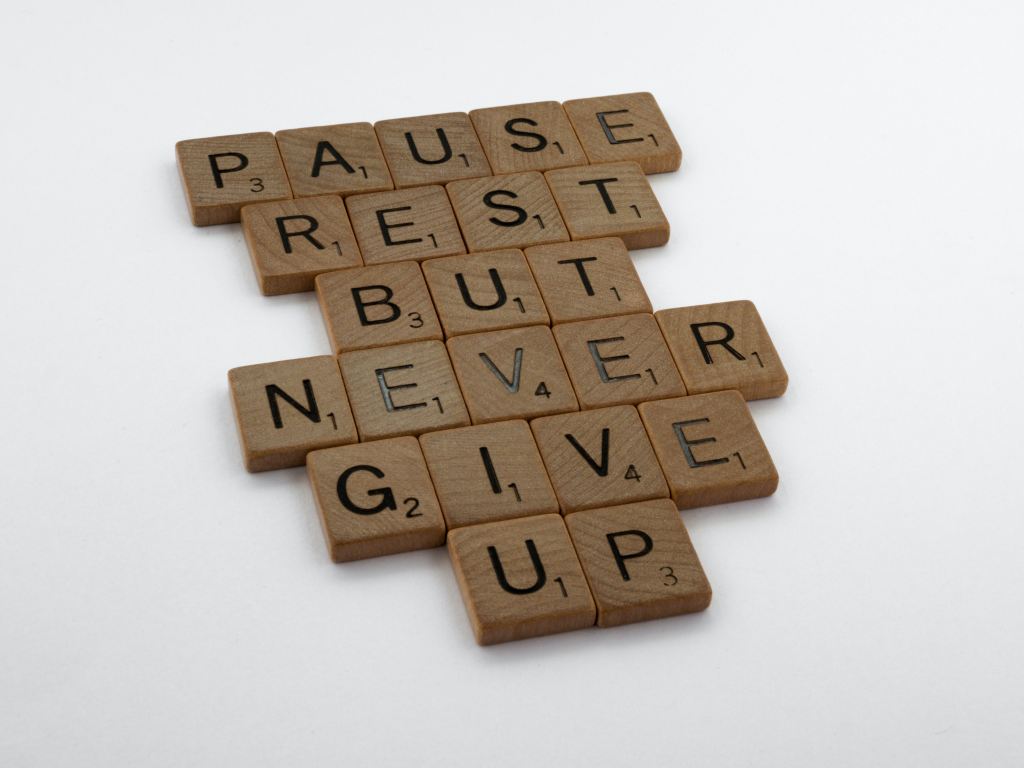
Photo by Brett Jordan on Unsplash
10. Find joy in the little things.
Do you take time to stop and smell the roses (literally)? I love to notice details, such as beautiful flowers and a bright, clear sky when I go on walks. Noticing the beauty around us makes us feel happy.

Photo by Dstudio Bcn on Unsplash
11. Mastery Experiences (Rest by Alex Soojung-Kim Pang)
Alex Soojung-Kim Pang’s book Rest identifies four major elements of recovery. One of them is Mastery.
Mastery experiences require you to use your skills to overcome a challenge. An example is learning a new creative hobby.
Focusing on these activities clears your mind of everything else.
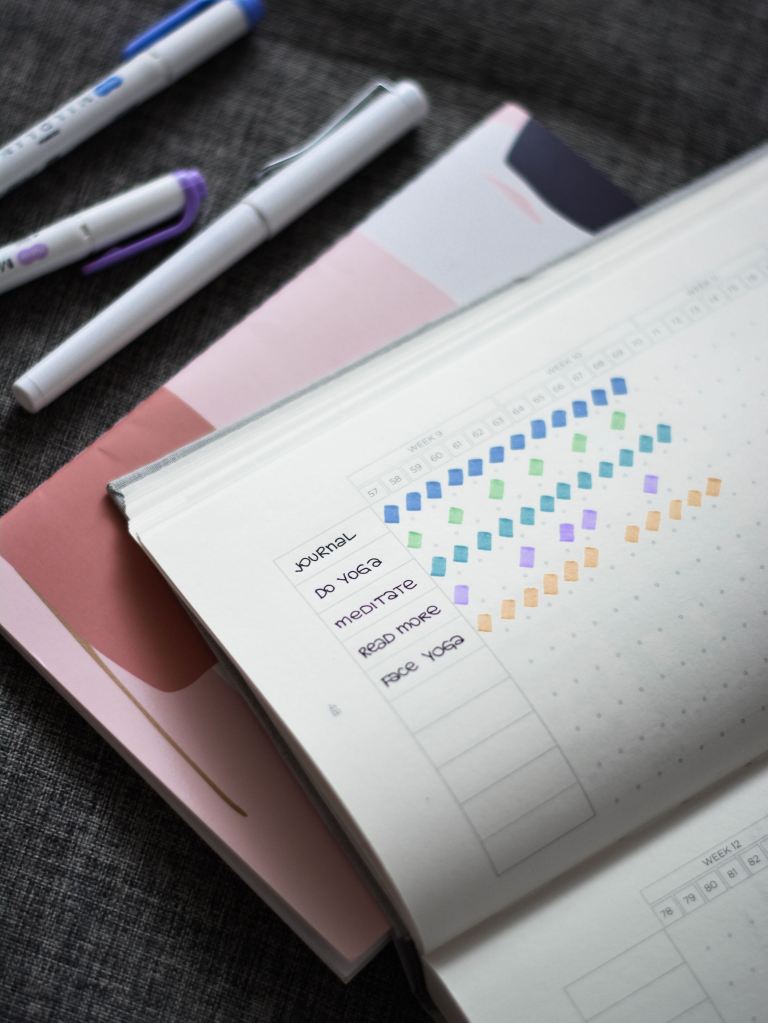
Photo by Prophsee Journals on Unsplash
12. Vary your daily routine
I know variety is important, but I also love comfort. I think a lot of people experience this duality. So how can we break out of our comfort zones and experience more variety?
An easy way to get more variety is to visit new places.
In the video that inspired this blog post, Michelle mentions a research study that tracked people’s GPS locations and found that visiting more places correlated to positive emotions.
One thing that helps motivate me to include more variety in my daily routine is to remember that variety can be as small or large as you want it to be. Taking small steps like visiting a coffee shop or trying a new walking path allows you to incorporate more variety into your life.

Photo by Kalen Emsley on Unsplash
13. Spend time in awe.
What is awe?
“Awe is the feeling we get in the presence of something vast that challenges our understanding of the world, like looking up at millions of stars in the night sky or marveling at the birth of a child.” – Greater Good Magazine
Creating the feeling of awe engages five processes:
Process 1: Shifts in neurophysiology
Process 2: A diminished focus on the self
Process 3: Increased prosocial relationality
Process 4: Greater social integration
Process 5: A heightened sense of meaning
This helps you get out of your head.

Photo by J Williams on Unsplash
14. Orchestrate your good times
Michelle points out that Serotonin-inducing activities require more effort than dopamine-inducing activities.
This means we need to intentionally plan serotonin-inducing activities.
How to plan fun activities for a happier life
“Good times should be orchestrated and not left to the uncertainties of chance.” – Ernest Hemingway.
Hemingway “planned fun as seriously as work.”
He believed work and fun were “of equal importance to wellbeing.”
This doesn’t mean you should make a rigid, structured plan for your relaxation activities. But, if I don’t make an intentional plan, I fall into my default routine. So how can we make sure we have fun, novel experiences without It just means making a general plan just to make sure you do something fun.
Make a list of fun activities you want to try/places you want to go/etc. Pick a day to do one of the things on that list. That is enough of a plan to get the ball rolling without making you feel suffocated by a strict schedule.

Photo by Milad Fakurian on Unsplash
15. Practice having a “time affluence” mindset
If you find yourself feeling time-poor, or like you “never have enough time in the day,” listen up. Ashley Whillans, author of Timesmart, offers tools to help us improve our time affluence. Whillans define time affluence as “the feeling of having enough time to do all of the things that you both want to do and have to do.”
So how can you improve your time affluence? First of all, you need to identify and cut out thought patterns that reinforce your negative mindset around time. These two things prevent you from having a time-abundance mindset:
Ruminating on the past
Anticipating the future
How can you spend more time in the present moment and stop worrying about the past and future?

Photo by Jess Bailey on Unsplash
16. Plan your week on Friday
Combat worrying about your to-do list by planning ahead. Spend time on Friday planning out the week ahead. Knowing you already have a plan to tackle these important tasks can help you cut back on this stress.
Weekly planning is a concept that many personal development gurus suggest. Many people suggest planning your week on Sundays. While this suggestion makes sense, I have learned that planning on Sunday has not worked for me. Spending time on the weekend planning out the week ahead, instead of relaxing, made me feel more stressed, not less. This is why I suggest planning your week on Friday, so you can keep work and weekends as separate as possible.

Photo by Marissa Grootes on Unsplash
17. Schedule your worry time
Another tool to help you manage your mindset is to set aside a specific “worry time.” You can only worry during that time. This is to prevent you from spending so much time in your head ruminating on hypothetical situations. When anxious thoughts pop up, tell yourself you will get back to them during your worry time. If it helps, you can jot down those thoughts in a journal or in your notes app to come back to later.

Photo by Estúdio Bloom on Unsplash
18. Don’t give up. Keep working on your mindset.
It takes time and effort to change your thought patterns. Keep working on it.
This post talks a lot about mindset work and how your mindset impacts your mood. It is important to remember that changing your mindset takes a lot of time and effort. Your thoughts and beliefs might feel engrained, but you can still make positive mindset shifts. Stay patient and keep working at it.
I hope this post helps you! I’m on a journey to learn how to live a happier and more joyful life. I’m documenting this journey to help others who also want to improve their lives. If this resonates with you, make sure to sign up for my email list and follow me on social media (links below). I post content about self-care, wellness, and mindset to help you learn how to live your best life!
 Life by Julia
3 thoughts on “18 Things You Can Do This Week To Live A Happier Life”